 SUPPORT



 3EX United States
Blog
A locked server room isn’t a complete security strategy. Strong colocation physical security standards combine layered access controls, trained security teams, perimeter barriers, and video surveillance to protect the infrastructure that stores and runs business systems. Each layer helps deter unauthorized entry and supports a controlled response when an access concern arises.
It’s reasonable to expect a colocation facility to protect the physical environment around your equipment, while recognizing that physical security differs from cybersecurity. Effective controls work together: certifications and independent assessments provide insight into security practices, staff follow procedures, and barriers, access systems, and cameras help secure the site. This article explains how these measures fit together, where their limits lie, and when customer-managed protections may matter, helping you assess how a facility safeguards physical infrastructure.
Key Takeaways
- Understand how layered entry controls help protect shared areas and private colocation spaces.
- Learn what an independent security certification can indicate, and why it should be considered alongside other controls.
- See how trained on-site teams support security procedures and respond to potential incidents.
- Recognize how fencing and video surveillance help monitor a facility’s perimeter and access points.
WHAT IS DATA CENTER SECURITY?
Data center security protects infrastructure from threats to physical equipment, information, and service availability. Colocation physical security standards combine site boundaries, controlled entry, permissions, and monitoring.
Perimeter Barriers and Secure Access Points
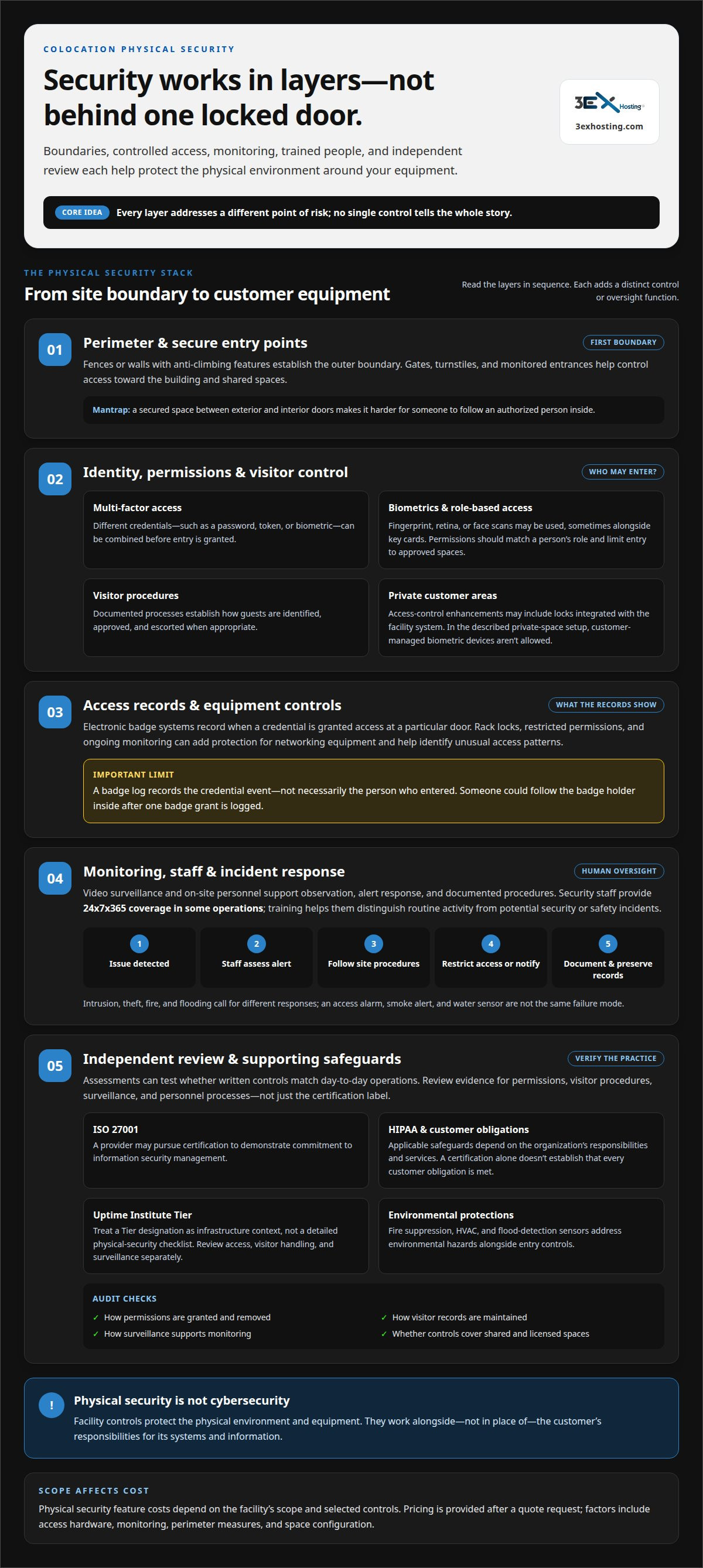
Perimeter barriers, such as fences or walls with anti-climbing features, establish the first controlled boundary around a data center. Gates, turnstiles, and monitored entrances help prevent unauthorized visitors from reaching colocation areas and equipment. A mantrap creates a secured space between exterior and interior doors, making it harder for someone to follow an authorized person inside. Together, these layers protect the building and shared spaces.
Multi-Factor and Biometric Access Controls
Multi-factor access combines different credentials, such as a password, token, or biometric, before granting entry. Biometric systems may scan fingerprints, retinas, or faces, sometimes alongside key cards in sensitive areas. Permissions should match each person’s role and limit access to approved spaces. In private licensed spaces, access-control enhancements may include locks integrated with the facility’s access system. Customer-managed biometric devices aren’t allowed in the described private-space setup.
Badge Logs and Access Limitations
Electronic badge systems record when a credential is granted access at a particular door, creating an audit trail. However, the log records the credential event, not necessarily the person who entered. For example, one badge grant may be logged even if someone follows the badge holder inside. Rack locks and restricted permissions add protection for networking equipment, while ongoing monitoring can help identify unusual access patterns.
Visitor Management and Physical Threat Protection
Documented visitor procedures establish how guests are identified, approved, and escorted when appropriate. Operators control shared areas, while customers need sufficient controls for their own networking equipment. Fire suppression systems, HVAC, and flood-detection sensors address environmental hazards alongside entry controls. These measures help reduce risks from intrusion, theft, fire, and water, but each protects against a different failure mode. A private cage configuration provides a defined customer space within the data center.
Physical security feature costs depend on the facility’s scope and selected controls. Pricing is provided after a quote request; factors include access hardware, monitoring, perimeter measures, and the space configuration.
Compliance certifications and independent assessments
In the United States, a physical security review should connect facility controls with the obligations relevant to the workload. Certifications and independent assessments can clarify what a documented security program covers.
Regulatory Compliance and Independent Audits
Regulatory compliance connects a facility’s documented controls with obligations relevant to hosted information. Healthcare organizations address HIPAA requirements, according to the U.S. Department of Health and Human Services. Applicable safeguards depend on the organization’s responsibilities and the services involved, so a certification alone doesn’t establish that every customer obligation is met. Independent audits can examine evidence such as access permissions, visitor procedures, surveillance records, and personnel processes. Their value lies in testing whether written controls match day-to-day practices.
Physical Security Standards and Tier Requirements
Colocation providers may pursue ISO 27001 certification to demonstrate their commitment to information security management, according to the International Organization for Standardization. For Uptime Institute Tier requirements, treat a Tier designation as infrastructure context, not a detailed physical-security checklist. Review access control, visitor handling, and surveillance separately. This distinction helps connect the certification’s scope to the server environment and the controls protecting it. A compliance label is useful evidence, but it doesn’t replace understanding which systems and processes were assessed.
Controls to Verify in Provider Audits
A physical-security audit should compare written procedures with evidence from facility operations. Review how access permissions are granted and removed, how visitor records are maintained, and how surveillance supports monitoring. Check whether controls cover shared spaces as well as licensed customer areas. Authentication records can show whether a credential was approved at a door, but they don’t prove who entered. Understanding that limitation helps you interpret logs accurately and identify where staff procedures or additional monitoring may be important.
For a clearer view of the facility environment supporting your infrastructure, explore data center facilities.
On-site security teams and training
Physical controls need human oversight because alarms and access systems can’t assess every situation alone. Security staff provide 24x7x365 coverage in some colocation data center operations. Their work may include observing facility activity, responding to alerts, and applying documented policies. Training helps personnel distinguish routine activity from signs of unauthorized entry, attempted equipment removal, or a safety incident. Clear procedures make the response consistent across shifts.
Common physical risks include intrusion, theft, fire, and environmental hazards such as flooding. A practical response starts when a person or system detects an issue. Staff assess the alert, follow site procedures, restrict access when appropriate, and notify relevant facility personnel. They can document the incident and preserve monitoring records. Defined responsibilities matter because an access alarm, smoke alert, and water sensor each require a different response.
Training should connect procedures to the hardware and sensitive areas staff oversee. For example, personnel need to know which alarms signal a perimeter concern and which indicate a problem near server equipment. A controlled escalation process helps route each alert to the appropriate response team. Regular policy reviews also help keep instructions aligned with facility operations, access permissions, and emergency procedures.
Backups support recovery, but they don’t prevent physical incidents or replace facility security. Colocation providers may store backup data both on-site and off-site and test it regularly. Separate copies can help an organization recover if an incident affects equipment or data in one location. Testing matters because backups are useful only when the organization can restore and use them. Security controls and recovery planning address different parts of operational resilience.
Staff response is one part of a broader data center security program. Perimeter monitoring can raise an alert, while trained personnel assess the situation and follow established policies. For example, suspected unauthorized entry may require staff to secure the affected access point and document the incident. The response depends on the threat and facility procedures. Clear training helps personnel act promptly without treating every alert as the same event.
Perimeter fencing and video surveillance
Colocation data centers use perimeter barriers and camera coverage as complementary security measures. Together, they help deter unauthorized approaches and support monitoring around sensitive infrastructure.
Perimeter Fencing and Security
Perimeter fencing defines a facility’s physical boundary and may include anti-climbing features. It helps make unauthorized approaches more difficult and gives security teams a clear area to monitor. Gates and other controlled access points direct entry through designated locations, where cameras and access procedures can support oversight. Fencing is one layer, not a substitute for controlled building entry or interior protections.
Around-the-Clock Video Surveillance
Some colocation providers use 24/7 surveillance cameras to monitor activity across facility areas. Cameras may connect with motion sensors, remote monitoring tools, and recording systems, helping staff review activity and assess alerts. Night-vision cameras can operate in darkness, extending visibility when ordinary lighting is limited. These capabilities support monitoring, but cameras don’t replace staff response or access controls.
Camera placement determines what surveillance can show. Facility cameras typically monitor the entrance to a tenant cage or suite rather than the equipment rows inside. In licensed customer spaces, customer-installed cameras must capture only images within that space. They can’t use analog PTZ functions or microphone or speaker audio. These limits define how surveillance works alongside other controls, including biometric entry measures.
Review the data center environment to understand how physical infrastructure and facility protections support colocation operations.
3EX Hosting
3EX Hosting helps businesses place and manage infrastructure in colocation environments suited to their space and operational needs. Full Cabinet Colocation, Private Colocation Suites, and Cage Solutions provide different ways to house server equipment, while Managed Cloud Hosting supports businesses using hosted infrastructure.
These options can help when your security requirements call for dedicated physical space or a defined deployment model. The right fit depends on your equipment, how much separation you need, and how your team manages access and operations. Aligning those needs with facility controls helps translate security priorities into an infrastructure plan.
To discuss your colocation requirements, contact 3EX Hosting.
Turn Security Requirements Into a Deployment Plan
Make physical security part of infrastructure planning, not a decision made after equipment is installed. Use the colocation physical security standards discussed here to define internal requirements: which teams need access, how customer-controlled equipment is managed, and how facility controls align with your operational policies. Clear responsibilities help prevent gaps between the data center’s role and your organization’s.
Next, connect those requirements to your deployment model and business priorities. Consider how your equipment, access needs, and continuity planning fit together. A focused discussion can help clarify the infrastructure arrangement that supports your operations without treating security as a standalone feature.
For a practical next step, contact 3EX Hosting about colocation to discuss your infrastructure needs. A well-defined plan gives your team a stronger foundation for operating with confidence.
Frequently Asked Questions
What Is a Mantrap?
A mantrap is a controlled entry space between a facility’s exterior and interior doors. It helps prevent someone from entering behind an authorized person. For example, a visitor may enter the space, complete identity checks, and proceed only after the inner door is released. This creates a separate checkpoint before access to sensitive data center areas.
Why Does Colocation Security Matter More Than Ever?
Colocation security matters because physical access to servers can affect business operations and the information those systems handle. A person who reaches equipment could disrupt hardware, tamper with connections, or compromise availability. Security also intersects with cybersecurity: protecting the building does not secure software or networks by itself. Organizations need both physical safeguards and controls for their systems and data.
What Do ISO 27001, SOC 2, and PCI DSS Require for Colocation Facility Physical Security?
These frameworks and standards serve different purposes, so their names alone don’t establish identical facility controls. ISO 27001 certification can demonstrate a provider’s commitment to information security management, according to the International Organization for Standardization. Payment environments must meet PCI DSS requirements. For a SOC 2 or other audit, focus on the report’s scope and whether it covers the facility and services relevant to your workload.
What Are Standard Requirements for CCTV Coverage, Recording Retention, and Monitoring in Colocation Facilities?
Colocation facilities may use 24/7 surveillance, and cameras can work with motion sensors, remote monitoring, and recording tools. Camera placement and retention schedules depend on the facility’s documented controls and applicable needs. For a practical review, distinguish live monitoring from recorded footage, then understand how an incident can be located and reviewed. A camera’s presence alone doesn’t establish coverage of every customer area.
How Do Colocation Physical Security Standards and Certifications Compare Across Providers?
Compare the scope and evidence behind security claims, not just certification names. Check whether an assessment covers the facility and services supporting your deployment, and whether customer-licensed areas are included. Then consider how documented controls address operational needs such as equipment access and incident review. A certification can support due diligence, but it doesn’t replace assessing whether the facility fits your workload.